
A Summary of the Interim Report of the Independent Review into Mental Health Conditions, ADHD and Autism
Introduction
The government is in the process of conducting an independent review into mental health conditions, ADHD and autism. As the review is ongoing, an interim report has been produced on the current findings. The pressure on public services resulting from these conditions has increased, and the government is seeking to understand the underlying causes and what actions should be taken. The final review is likely to have large implications for public policy and the way services for these conditions are delivered in the UK.
The interim report mostly discusses the evidence it has gathered so far, which principally covers the change in the number of diagnoses of these conditions. The report also takes care to note that the evidence is very complicated and therefore difficult to reduce down into an easy-to-digest narrative.
The report aims to remain neutral and establish only the facts on the topic. Unfortunately, however, the report has taken an approach that includes unhelpful phrases such as “medicalisation of distress” and other harmful terminology, which undermines the reality that many neurodiverse people face. This aspect has been questioned by commentators, including prominent charities, and will be discussed later in this summary in more detail.
The report can be read in full here.
Background
Wes Streeting, the former Secretary of State for Health and Social Care, launched the review on 4th December 2025. The review was officially prompted by a rise in the level of mental health conditions in the population, and the reality that many individuals with ADHD and autism are struggling to access support. The review was tasked to look at:
Similarities and differences between mental health conditions
Prevalence, prevention and treatment of ADHD and autism
Current challenges of clinical services
The effect of diagnosis, medicalisation and treatment on individuals’ outcomes
Possible models of support and pathways, which are not necessarily confined to the NHS
Wes Streeting asked Professor Peter Fonagy to chair the review, especially due to his experience in this field. An advisory working group was also appointed to support the review, which included a variety of voices. The review was tasked to produce its findings within 6 months, including the conclusions and recommendations it would make.
Wes Streeting has previously remarked in a BBC interview that mental health conditions were being overdiagnosed and that too many young people are being written off. After that interview, he declared that these remarks had failed to capture the complexity of the problem and a proper evidence base was needed to help resolve questions in this area. Additionally, the government at the time was looking to make cuts to welfare spending and support for disabilities.
The complexity of the background of the report helps to explain why the report covers a large ground and focuses heavily on the topic of overdiagnosis.
Findings
Mental Health
The most dramatic rises over time in general mental health problems have been seen in young adults. This psychological distress was linked to the growing number of NEET individuals in this demographic (not in education, employment or training). Depression, anxiety, self-harm and eating disorders have been dramatically increasing in this age group. The main symptoms that young people have been experiencing in growing amounts relative to 20 years ago include:
Loss of confidence in self
Inability to concentrate
Not feeling like playing a useful part in society

Overdiagnosis
The most controversial part of the report is perhaps the discussion on overdiagnosis. The report makes it clear there are two main ways of interpreting the rise in demand: the first is that this is a product of overdiagnosis and unnecessary medicalisation, and the second is that there has been historic under-recognition and need is now growing in real terms. The report attempts to remain neutral and states that both interpretations are equally valid, and it is likely the case that both overdiagnosis and underdiagnosis are major issues at the same time.
Autism
Most of the information about autism available is on what the data suggests about the current prevalence. The report says that although the number of people diagnosed with autism has remained mostly stable, the number of people self-identifying as autistic is increasing. Autism diagnoses among females are increasing and catching up with their male counterparts. Autism diagnoses also express a strong amount of regional variance.
Below are the changes in incidence over recent decades (as given by the report):
| Incidence per 100,000 | ||
| Year 2000 | Year 2018 | |
| Males | 20 | 111 |
| Females | 4 | 40 |
ADHD
Similar to autism, the report focuses on the rate of diagnosis of ADHD. However, ADHD has seen much larger changes in prevalence compared to autism.
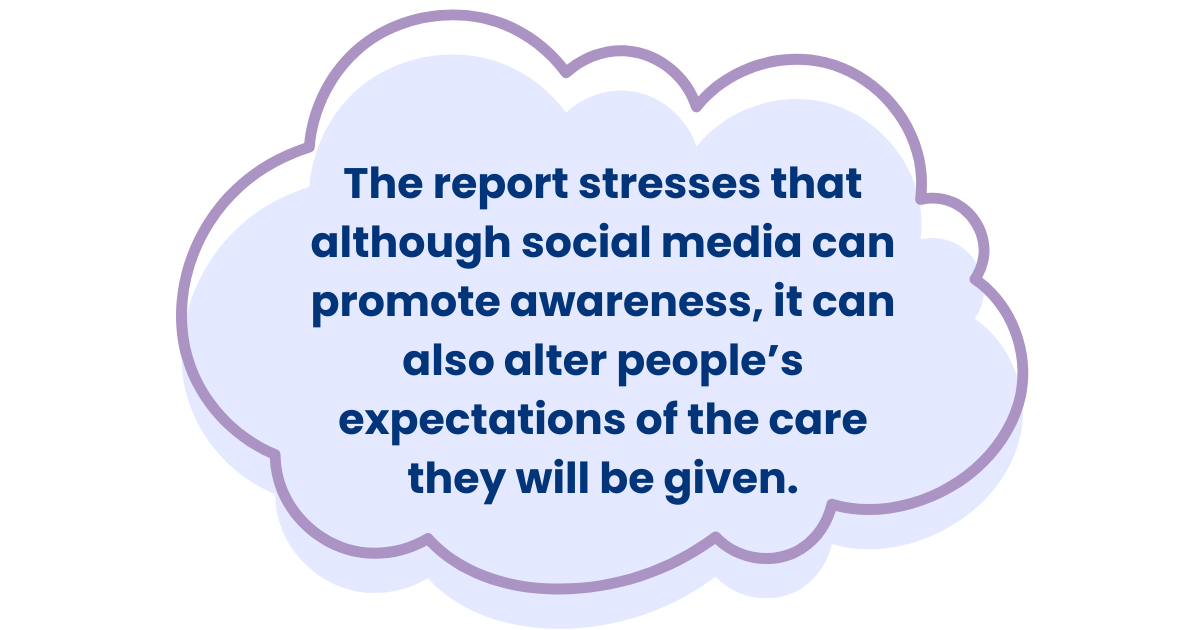
In April 2019, a total of 21,000 young people were waiting for a diagnosis. This number, as of December 2025, stands at 270,000. Again, the report points out that the actual level of symptoms has remained mostly stable; however, it cautions against making quick judgements based on this evidence alone. Underdiagnosis is still likely a major issue, particularly with an underrepresentation of adults in the criminal justice system. The rise in the number of ADHD diagnoses may be due to social media, where the report says people are going to receive peer support.
TikTok is mentioned as a major source of misinformation on the topic, with around 52% of content on the site labelled as inaccurate by experts.
AuDHD
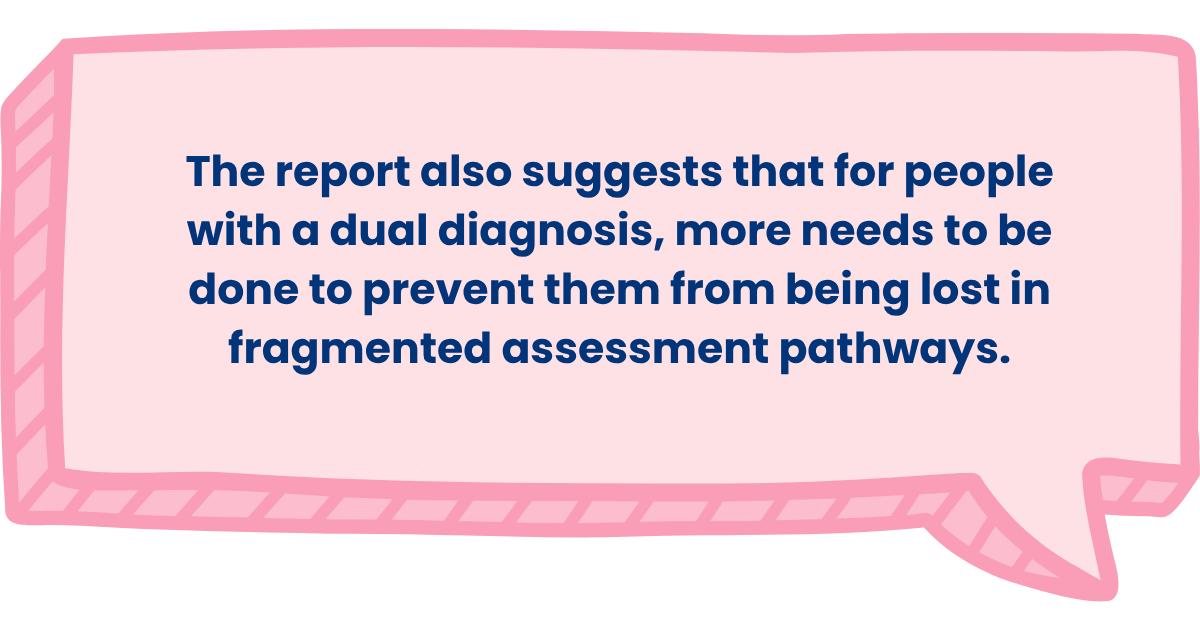
Although the report does not make an explicit reference to AuDHD as a term, it briefly mentions the specific overlap of autism and ADHD. The report states that since the removal of the autism-ADHD exclusion, the co-existence of these diagnoses has risen, and the overlap is now very common.
There will be more discussion about this in the final review, when more evidence will have been evaluated.
Support Systems
The report underlines that the current demand from mental health conditions puts public services under immense pressure, and the existing system is unsustainable and unlikely to be fair. The final review will likely make recommendations to reform the system in a way which promotes “earlier, less intensive and more accessible forms of provision,” which avoids a system based on diagnosis alone, thereby helping prevent prolonged waits for access to treatment. Such a delivery will likely involve a move to more community-based treatments and reducing the dependence on specialist care. Most likely, however, there is a suggestion that services which are responsible for the care of these conditions will inevitably be scaled back.
Next Steps
As the review continues, more investigation will be made into other important areas. These include:
Aiming to further understand the changes that are occurring, especially in terms of symptoms, and what effect these changes have on people.
Implications for support, diagnosis and system design.
A greater amount of detail will be made about the impact of the private sector in the diagnosis of autism and ADHD.
A specific discussion about the overlap of autism and ADHD, including the course of these over someone’s lifetime, which will be very important to AuDHD UK.
The final review will contain more perspectives, which should provide a greater balance to the conclusions made.
Reactions
The National Autistic Society points out that, despite the report highlighting a massive increase in demand for services, the language of the report helps fuel polarised debates on neurodiversity. One strong example of this, in their opinion, is questioning people’s desire for a diagnosis, instead focusing on the very real distress many people and their families face with autism. The National Autistic Society states that more consultation needs to be done with people who have autism as part of this review, and ensuring that a clear plan is created to meet the needs of people with autism.
The Centre for Mental Health was more positive about the overall article, and although they strongly disagreed with the language of questioning, they see the review as an opportunity to create reform in the healthcare service, especially relating to changes to the requirement of currently needing a diagnosis to access the most support.
Most charities agree with the above views. Autistica, an autism research charity, points out that there may be flaws in the design of the review. The data types which are used are more capable of explaining trends, rather than being able to establish causality, especially as differences between healthcare providers can distort data. Autistica also believe there is limited information on the association between these conditions and cultural, ethnic and gender diversity, limiting our ability to understand the wider picture.
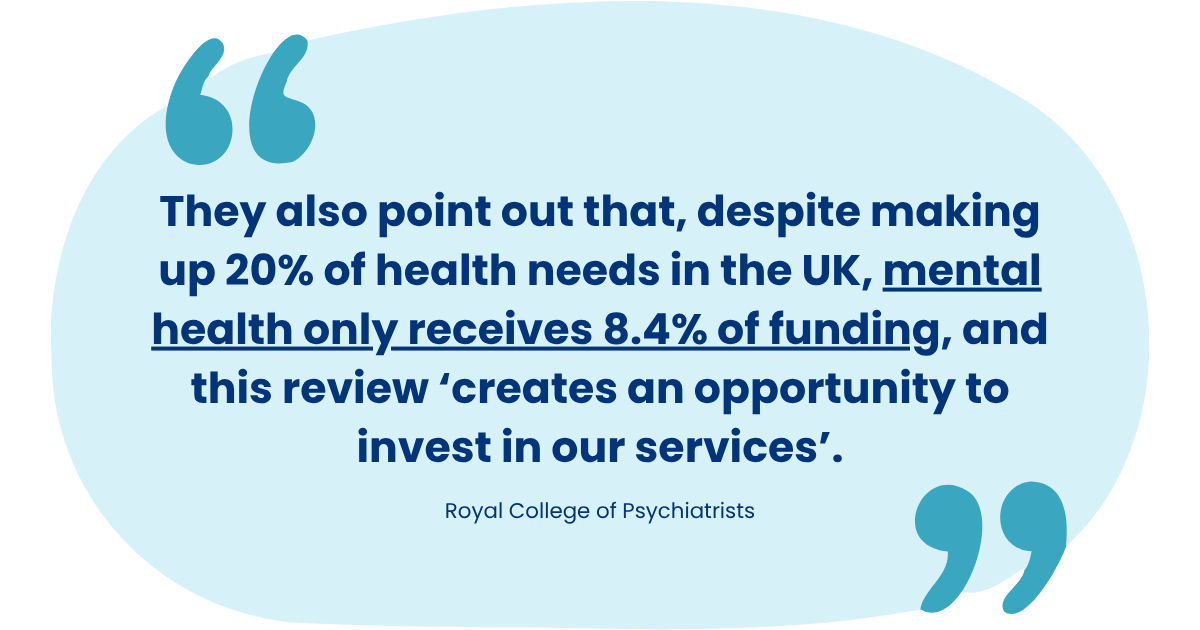
The view of the Royal College of Psychiatrists is that they believe the report makes a positive point on how mental health services are stretched thin, and the report is helpful in that it encourages the idea of earlier interventions to help people with these conditions.
Summary
A review was launched by Wes Streeting on the diagnosis of mental health conditions, including autism and ADHD. Although the review is not yet complete, an interim report has been made.
The report found:
There has been a rise in mental health conditions, especially among young people, which has put public services under immense pressure.
There has been an increased prevalence of autism and ADHD over the past decades. The report suggests this is likely due to changes in the threshold for diagnosis. The increase in diagnoses is more apparent in ADHD compared to autism.
There remains a lot of uncertainty as to the cause of the increased number of diagnoses.
Some groups are still likely to be facing underdiagnosis.
Recommendations will likely include removing the requirement for diagnosis to access treatments, and more interventions will be given at community level rather than by specialists.
The next phase of the research will concentrate on areas such as proposals for new diagnosis and management pathways, and investigating the specific overlap of autism and ADHD (AuDHD).
A lot of commentators have pointed out that this review may fuel unnecessary questioning of diagnosis, despite this experts are hopeful this review will bring an opportunity for reform of the current system.
At AuDHD UK, we will continue to champion and campaign for fair and robust testing, and for providing free Peer Support Services for late-diagnosed neurodivergent adults who need it.
Wherever you are in your assessment journey, whether you are on a never ending NHS waitlist, or just self-identifying at the moment and looking for a space to explore your struggles, we are here for you.
Get in touch today at hello@audhduk.org to find out how we might be able to support you.
References
Streeting W. House of Commons: Written Statement (HCWS1132). 2025. Accessed May 29, 2026. https://commonsbusiness.parliament.uk/Document/100016/Pdf?subType=Standard
Triggle N, Tian Y. Streeting orders review into mental health and ADHD diagnoses - BBC News. BBC News. December 8, 2025. Accessed May 29, 2026. https://www.bbc.co.uk/news/articles/ce8q26q2r75o
Our response to the interim report of the independent review into the prevalence of autism, mental health and ADHD. National Autistic Society. April 1, 2023. Accessed May 29, 2026. https://www.autism.org.uk/what-we-do/news/response-to-review-into-prevalence-of-autism-mental-health-adhd
Interim report of prevalence review confirms that rising distress is real, but questions remain about how to respond. Centre for Mental Health. April 1, 2026. Accessed May 29, 2026. https://www.centreformentalhealth.org.uk/news/item/interim-report-of-prevalence-review-confirms-that-rising-distress-is-real-but-questions-remain/
Our response to the government’s interim report into assessment and support. Autistica. April 1, 2026. Accessed May 29, 2026. https://www.autistica.org.uk/news/interim-report-assessment-diagnosis
RCPsych comments on interim findings of independent prevalence review for England. RCPsych. April 2, 2026. Accessed May 29, 2026. https://www.rcpsych.ac.uk/news-and-features/latest-news/detail/2026/04/02/rcpsych-comments-on-interim-findings-of-independent-prevalence-review