
Neurodivergence in the Workplace
Introduction
Neurodivergent individuals are still not well represented in the workforce, and specifically, autistic adults are much less likely to be employed compared to their peers.
Autism and ADHD are often researched separately, yet frequently co-occur — sometimes described as AuDHD — so many people manage the demands of both at the same time.
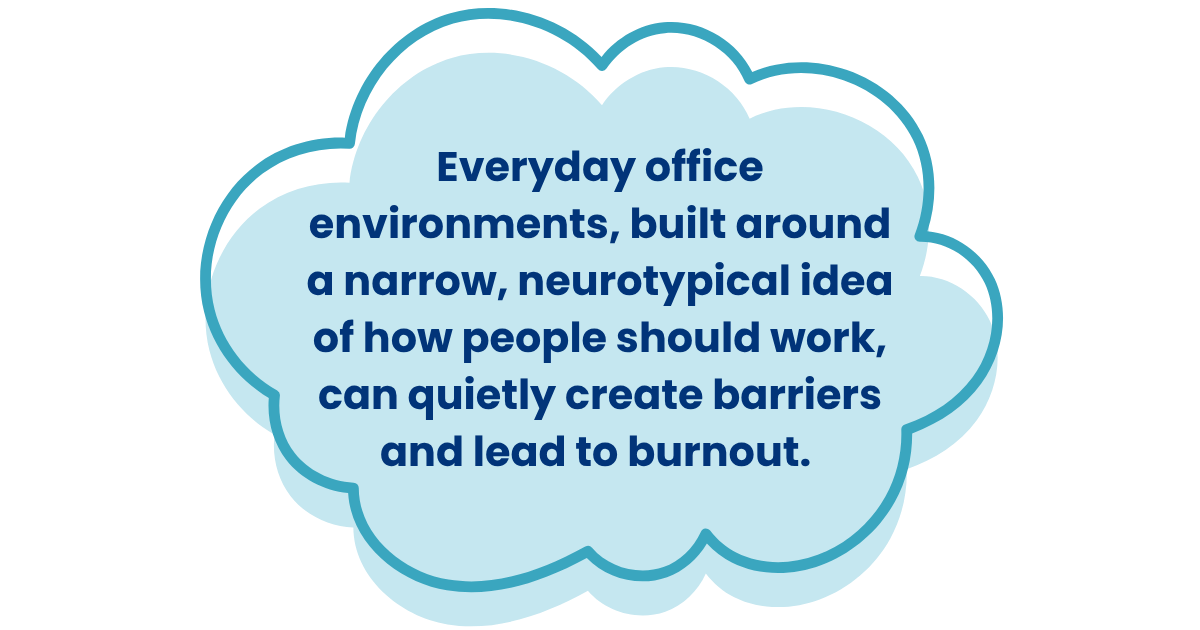
This article sets out why a typical workplace can be so demanding for AuDHDers, the adjustments that genuinely help — including flexible and hybrid working — and how a positive, inclusive culture benefits everyone.
Disclaimer: Some links on this page are affiliate links, which means we may earn a small commission if you click through and make a purchase, at no extra cost to you. This helps support our charitable work, and we only recommend what we believe in. Please read our Affiliate Disclosure for more information.
Difficulties for AuDHDers in a Typical Workplace
In a standard office setting, it is often the environment that acts as a barrier, rather than the individual.
Workplaces are filled with sensory information that can overload and drain an individual’s focus. Everyday workplace demands can also be taxing on executive function — the mental skills used to plan, prioritise and maintain focus — which can build fatigue over time. A person who also finds these environments socially demanding may deplete their social battery before the day is done.
Common barriers faced in a typical office include:
Sensory overload – from open-plan noise and bright lighting to constant emails and busy spaces, all of which can drain focus throughout the day.
Executive-function demands – juggling priorities, deadlines, and the unspoken expectation of the workplace is exhausting and feeds into burnout.
Social exhaustion and masking – the ongoing effort to ‘fit in’ is draining and is a recognised cause of burnout.
The key takeaway: these are mismatches between people and settings — which means they can be designed out.
Effective Workplace Adjustments & Why They Work
Small, tailored changes — especially flexible and hybrid working — can help many AuDHDers work more comfortably and focus better.
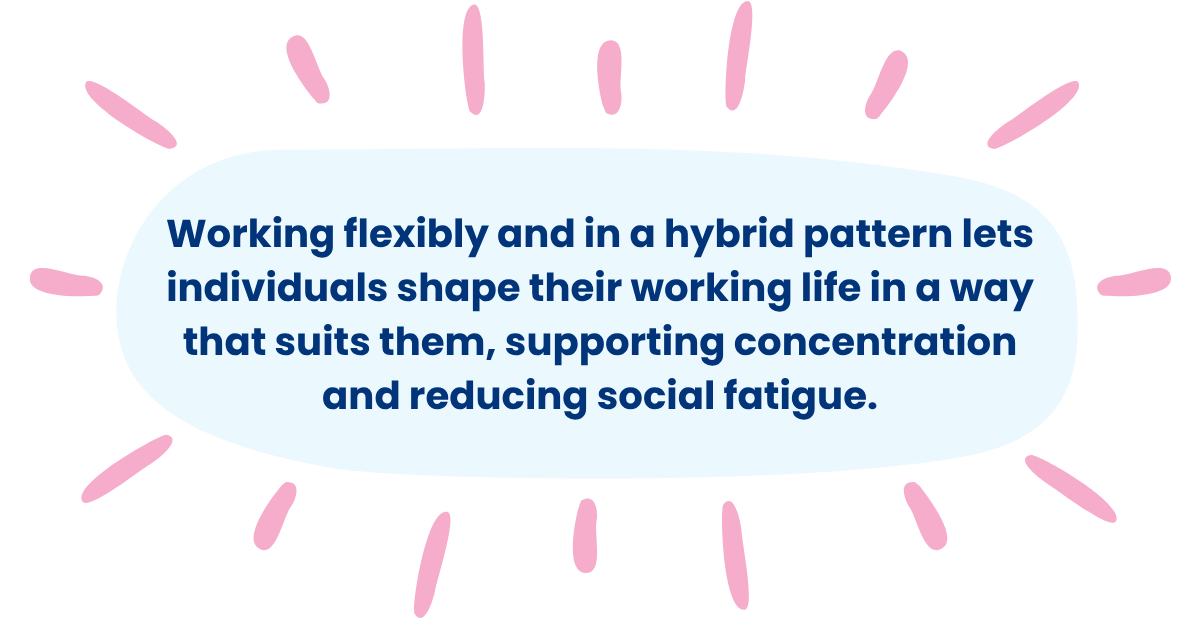
Access to dedicated spaces with controlled surroundings helps address sensory and environmental challenges. Crucially, the relationship and tailored coaching around an adjustment are central to making it work. Where adjustments are in place, autistic adults have around three times the odds of appropriate employment — yet only about a quarter receive them.
Adjustments that help include:
Flexible and hybrid working – control over working hours and location helps support concentration and reduces social exhaustion, while giving the individual the choice to fit their own needs.
Sensory and environmental changes – access to quiet spaces, adjustable lighting, and items such as noise-cancelling headphones.
Supportive relationships and structure – a trained manager, clear written instructions, meeting agendas ahead of time and tailored coaching tie the adjustments together and make them work.
The key takeaway: the best adjustments give people control over how, when, and where they work — which helps prevent burnout.

Creating a Positive Working Environment for Neurodivergents
Creating inclusion from the beginning — rather than adding solutions after issues arise — enhances well-being and helps retain employees. Neurodivergent employees also bring real strengths, such as spotting inefficient processes that others miss, so an affirmative culture is an asset rather than a cost.
Inclusive practices include:
Universal design – developing accessible roles and processes from the start, instead of trying to fix them later.
Inclusive hiring – adjusting the interview format to prioritise skills-based assessment over social performance.
A neuro-affirmative culture – awareness training, appreciating diverse strengths, and following through on requests so people’s voices are heard.
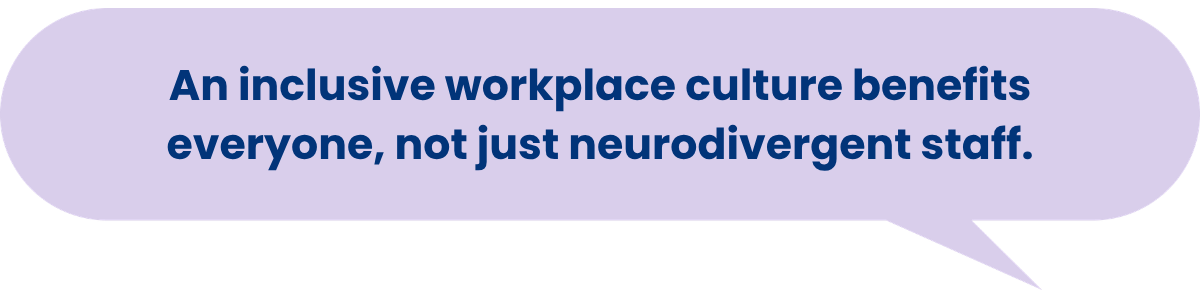
The key takeaway: an inclusive culture improves wellbeing and retention — and lets neurodivergent people contribute their strengths.
Conclusion
Supporting AuDHDers at work is rarely about asking individuals to try harder or to mask more — it is about designing environments that fit the people in them.
The same themes run through each section: reducing sensory and social load, giving people genuine control over how, when and where they work, and building a culture that treats different ways of thinking as an asset.
These changes help prevent burnout, improve well-being and retention, and let neurodivergent employees do their best work. A workplace where AuDHDers can thrive tends to be a better, more thoughtful place for everyone.
References
Heinze, C. (2025) ‘Workplace accommodations and employment outcomes among employees with autism: a systematic review’, Cureus, 17(12), e99353. doi:10.7759/cureus.99353.
Turjeman-Levi, Y., Itzchakov, G. and Engel-Yeger, B. (2024) ‘Executive function deficits mediate the relationship between employees’ ADHD and job burnout’, AIMS Public Health, 11(1), pp. 294–314. doi:10.3934/publichealth.2024015.
Raymaker, D.M., Teo, A.R., Steckler, N.A., Lentz, B., Scharer, M., Delos Santos, A., Kapp, S.K., Hunter, M., Joyce, A. and Nicolaidis, C. (2020) ‘“Having all of your internal resources exhausted beyond measure and being left with no clean-up crew”: defining autistic burnout’, Autism in Adulthood, 2(2), pp. 132–143. doi:10.1089/aut.2019.0079.
Brooks, S.K., Hall, C.E., Rogers, M.B. and Greenberg, N. (2024) ‘Homeworking experiences of neuro-divergent workers: systematic review’, Occupational Medicine, kqae095. doi:10.1093/occmed/kqae095.
Lauder, K., McDowall, A. and Tenenbaum, H.R. (2022) ‘A systematic review of interventions to support adults with ADHD at work—implications from the paucity of context-specific research for theory and practice’, Frontiers in Psychology, 13, 893469. doi:10.3389/fpsyg.2022.893469.
Hartman, L.M. and Hartman, B.L. (2024) ‘Neurodiversity in the workplace: an agenda for research and action’, Diversity & Inclusion Research, 1(2), e70000. doi:10.1002/dvr2.70000.
Koldas, M., Dounavi, K., MacCarthaigh, M. and Dillenburger, K. (2025) ‘Facilitators and barriers to employment of neurodivergent individuals: a systematic literature review of employee and employer experiences’, Journal of Autism and Developmental Disorders. doi:10.1007/s10803-025-07139-6.