
Burnout in Late-Diagnosed Neurodivergent Adults
Introduction
Neurodivergent adults diagnosed later in life often spend many years without understanding their traits or having access to appropriate support. As a result, late-diagnosed neurodivergents are more at risk of experiencing a prolonged struggle with masking their differences, ongoing stress, and developing burnout.
This article explores:
Key definitions
What is Masking, Chronic Stress and Burnout?
Common coping strategies and preventative approaches
| Key Term | Definition |
|---|---|
| Masking | Camouflaging or suppressing neurodivergent traits to conform to neurotypical social pressures. |
| Chronic Stress | Prolonged feelings of pressure, anxiety, or threat that do not easily go away (often several months or more). |
| Burnout | Severe physical, mental, and emotional exhaustion that makes everyday tasks difficult. |
What is Masking?
Masking (or camouflaging) is a combination of strategies used to manage neurotypical social expectations. It can happen in multiple settings e.g. school, work or home, and can occur when socialising with strangers or social interactions with friends and family. Masking is common among neurodivergent individuals in an effort to consciously or unconsciously appear neurotypical. It is used as a coping strategy in order to blend in and feel more socially accepted.
Examples of masking include:
Imitating social behaviours, such as using a particular tone of voice or mimicking facial expression/body language
Suppressing natural responses, like stopping or hiding stimming (repetitive physical movements, sounds, words, or moving objects)
Constant self-monitoring, by having a heightened awareness of how they are perceived by others
Using rehearsed conversational “scripts” to manage social interactions
Masking in neurodivergent individuals is often linked to delayed or missed diagnoses, particularly among women. Research suggests that women may engage in masking more frequently and in a wider range of situations than men. While masking can serve as an ‘effective’ short term coping strategy to get by in social and professional settings, many neurodivergent adults find it exhausting, stressful, and it contributes to mental health challenges over time.
What is Chronic Stress?
Chronic stress is prolonged exposure to feelings of pressure, anxiety, or threat that leaves a person feeling consistently overwhelmed over an extended period of time. It can lead to persistent fatigue, emotional exhaustion, and lower overall wellbeing, and may also increase the risk of mental health problems over time.
In neurodivergent adults, chronic stress is often linked to ongoing social pressures, sensory sensitivities, and experiences such as misunderstanding, exclusion, or not getting the right support.
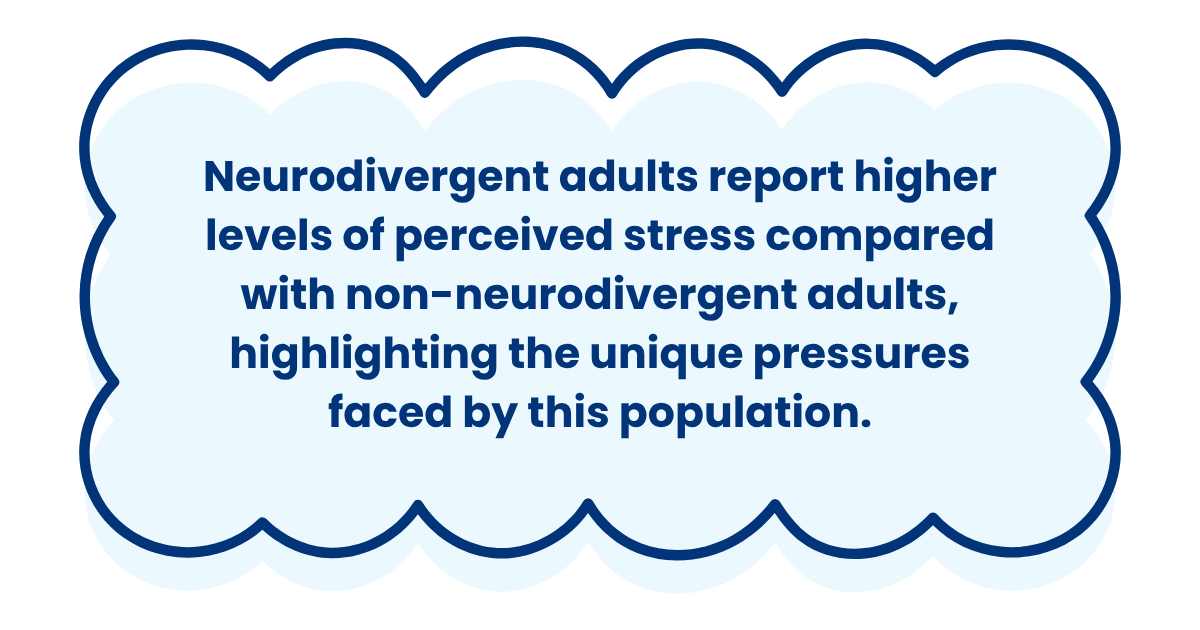
Over time, these pressures can contribute to higher levels of perceived stress and impact both mental and physical wellbeing.
These factors can lead to feeling overwhelmed and exhausted, especially when there is no break in demand and there isn’t enough time or support to rest and recover.
What is Burnout?
Burnout in neurodivergent individuals is extreme physical, mental, and emotional exhaustion, combined with reduced ability to function and increased sensitivities (e.g. sensory) which can affect daily activities such as work, study, self-care, and social interaction.
Burnout can occur in anyone, however, it occurs more often in neurodivergent individuals due to ongoing pressures such as masking, sensory overload, and navigating environments that are designed for a neurotypical world.
Burnout is linked to unmet support needs, chronic stress and not having enough time or opportunities to recover.
Current Research
Masking, chronic stress and subsequent burnout are common experiences for neurodivergent adults, although exact figures are not well established.
Neurodivergent adults describe burnout as severe exhaustion, difficulty managing everyday tasks, heightened sensory sensitivities, and a strong need for rest.
Late-diagnosed neurodivergent adults often experience prolonged masking and unrecognised burnout. Being unaware of their neurodivergence makes it harder for late-diagnosed individuals to understand why they are struggling, which often leads to feelings of confusion, frustration, and distress. Understanding these experiences is crucial for improving support, mental health outcomes, and quality of life.
Research consistently shows that masking can contribute to chronic stress, which over time may increase the risk of burnout. Reducing everyday pressures, getting the right support, and having enough time for rest and recovery is important for reducing their combined impact.
Effective Coping Strategies and Preventative Approaches
Effective approaches to reduce burnout include:
Structured rest and pacing of work: Try to reduce exposure to frequent, high demands and give yourself enough recovery time between tasks.
Emotional regulation activities: Make time every day for a hobby or sensory-friendly activity to reset your mood and ensure you include easy, preferred routines into your day that can provide comfort, predictability, and a sense of control.
Self-advocacy: Setting and politely maintaining boundaries or choosing when to disclose your diagnosis can help to reduce social pressure and protect your personal energy.
These approaches may help reduce overload, support emotional regulation, and lower the risk of burnout by improving the balance between environmental challenges and personal coping capacity. Over time, consistently applying these approaches may also help individuals better manage stress responses and reduce the impact of masking and chronic stress, particularly in environments that are not naturally accommodating.
Conclusion
Current evidence suggests that masking, chronic stress and burnout are closely interconnected and often experienced by neurodivergent adults, especially those diagnosed later in life. While researchers define and measure these experiences in different ways, the evidence shows that long periods of stress and having to mask neurodivergent traits can lead to feeling overwhelmed, emotionally drained, and less able to cope with daily life. Overall, having enough support, reducing pressure, and allowing time to rest and recover can help reduce the likelihood or the intensity of burnout.
AuDHD UK can help. Get in touch now at hello@audhduk.org for more information on accessing our free Peer Support Services.
References
Hull L, Petrides KV, Allison C, Smith P, Baron-Cohen S, Lai MC, Mandy W. Putting on My Best Normal: Social Camouflaging in Adults with Autism Spectrum Conditions. Journal of Autism and Developmental Disorders. 2017;47:2519–2534. doi:10.1007/s10803-017-3166-5.
Cage E, Troxell-Whitman Z. Understanding the reasons, contexts and costs of camouflaging for autistic adults. J Autism Dev Disord. 2019;49(4):1899–1911. doi:10.1007/s10803-018-03878-x.
Raymaker D, Teo A, Steckler N, Lentz B, Scharer M, Delos Santos A, Kapp S, Hunter M, Joyce A, Nicolaidis C. Having All of Your Internal Resources Exhausted Beyond Measure and Being Left with No Clean-Up Crew: Defining Autistic Burnout. Autism in Adulthood. 2020;2(2):132–143. doi:10.1089/aut.2019.0079.
Cage E, Di Monaco J, Newell V. Experiences of stress in autistic adults: Comparing perceived stress to non-autistic adults. Autism Research. 2018;11(10):1316–1327. doi:10.1002/aur.1985.
Mental Health UK. Chronic stress [Internet]. London: Mental Health UK; [cited 2026 Jun 11]. Available from: https://mentalhealth-uk.org/help-and-information/stress/.
Osborne C, Barker J, Cole A, Russell R. Autistic people’s experience of camouflaging and autistic burnout in relation to one another: A systematic review. Research in Neurodiversity. 2026;100025. doi:10.1016/j.rin.2026.100025.
Ali D, Mandy W, Happé F. How does “autistic burnout” feel? A qualitative study exploring experiences of earlier and later-diagnosed autistic adults. Autism. 2026;30(4). doi:10.1177/13623613261422117.
Cook J, Hull L, Crane L, Mandy W. Camouflaging in autism: a systematic review. Clinical Psychology Review. 2021;89:102080. doi:10.1016/j.cpr.2020.102080.
Bradley L, Booth R, Dumas E, et al. Autistic adults’ experiences of camouflaging and its perceived impact on mental health. Autism in Adulthood. 2021;3(4):293–305. doi:10.1089/aut.2020.0071.