
Gender Differences in Late AuDHD Diagnosis
Introduction
In this research summary, we provide a brief overview of the key concepts related to the late diagnosis of AuDHD, with a particular focus on gender differences affecting women and non-binary adults.
The summary covers the following topics:
Gender identity and differences in clinical presentation
Masking and internalised presentation
Misdiagnosis and missed diagnosis
Gender Identity and Clinical Presentation
Gender identity and differences in how autism and ADHD present can both affect the diagnostic process.
Gender Identity
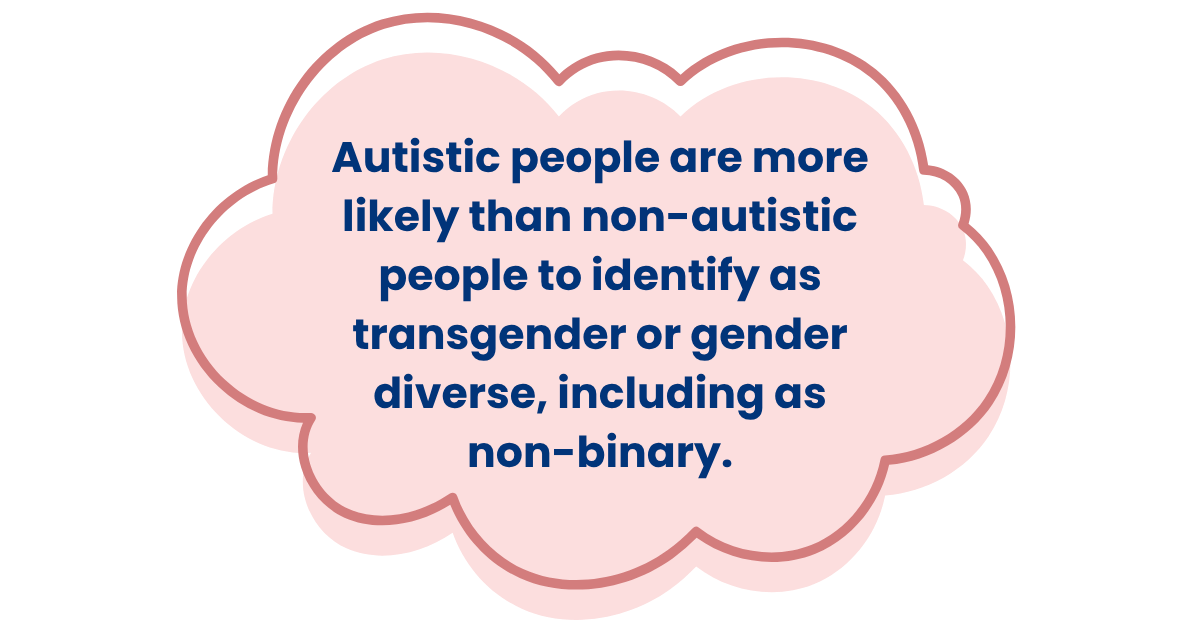
Research has also explored links between gender diversity and neurodevelopmental differences more broadly.
Gender identity can shape people’s experiences of healthcare. Some transgender and non-binary people may access gender-affirming healthcare services, such as gender clinics or hormone therapy. Research suggests that autistic transgender and non-binary people can experience particular barriers and challenges when accessing healthcare, including gender-affirming care.
Differences in Clinical Presentation
Autism and ADHD have often been recognised more easily in boys, particularly when the traits are most visible. These may include hyperactivity, impulsivity, and disruptive behaviour, or more recognisable autistic traits in childhood.
Women and girls may be more likely to experience difficulties that are less visible to others, such as anxiety, stress or emotional distress. Their autism and ADHD may therefore be missed, particularly when their behaviour does not match common stereotypes.
Social expectations may also play a part. Women and girls may be expected to appear socially competent, compliant and emotionally controlled. Their difficulties may therefore be described as shyness, sensitivity, anxiety or stress rather than recognised as possible neurodevelopmental differences.
This may lead to fewer referrals for assessment in childhood. Diagnosis may then be delayed until adulthood, when increasing demands make difficulties harder to conceal or manage.
For some women, neurodevelopmental differences may become more noticeable or harder to manage during perimenopause and menopause. This may also contribute to recognition or diagnosis later in life.
Masking and Internalised Presentation
Masking can mean changing how you behave so that you fit in or meet other people’s expectations. This can happen consciously or without you realising it.
Masking can make neurodivergent traits harder to recognise, particularly when assessments rely heavily on behaviour that can be seen. This can lead to difficulties being missed or misinterpreted and can delay identification and diagnosis.
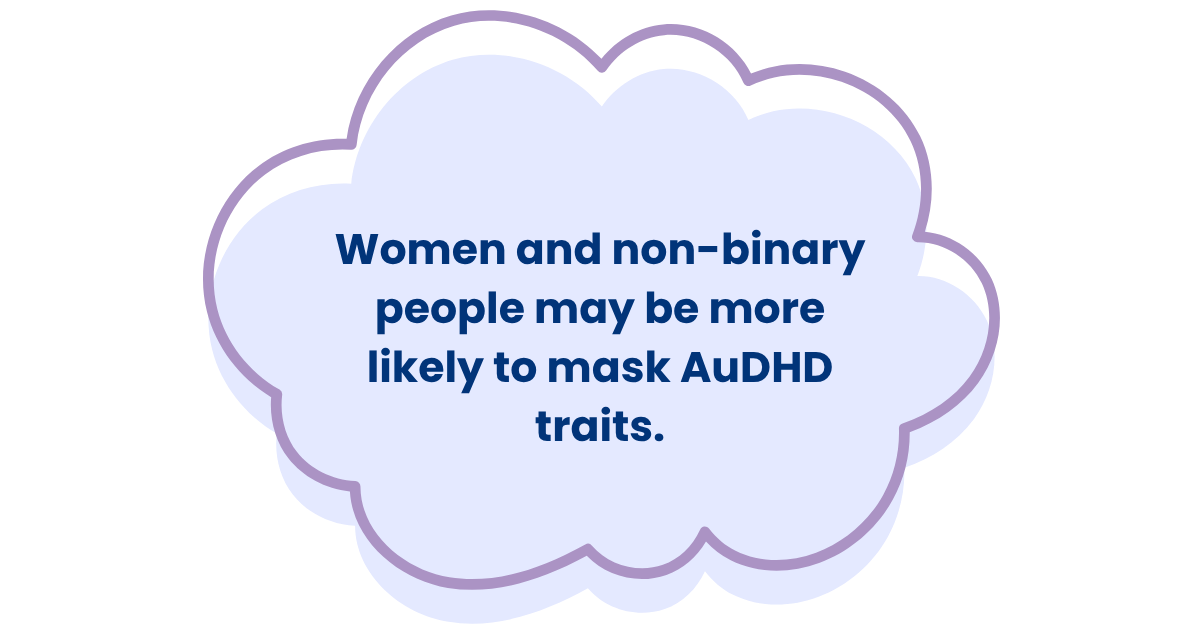
Women and some non-binary people may report masking more often. Stereotypical expectations of girls can increase the pressure to mask, including that they should be:
cooperative
sociable
well-behaved
This may make autism or ADHD less visible to families, teachers and clinicians.
Masking is not limited to women. Neurodivergent boys and men may also hide traits or closely monitor their social behaviour to avoid negative judgement.
Over time, sustained masking may contribute to exhaustion and burnout. For some people, difficulties only become more obvious when masking becomes harder to maintain. This can lead them to seek support or assessment later in life.
Research about masking in AuDHDers is still limited. More research is needed to understand masking in people with ADHD as well as autism, including how it may affect late diagnosis.
Misdiagnosis and Missed Diagnosis
Misdiagnosis and missed diagnosis can both delay identification of AuDHD.
Women may experience delayed recognition of autism and ADHD, particularly when their presentation is less obvious or when their difficulties are explained in other ways. This can sometimes lead to a different diagnosis being given first. Some neurodivergent women in one study were diagnosed with a personality disorder before autism was recognised.
Sometimes autistic or ADHD traits are explained by another condition, such as anxiety, depression or borderline personality disorder. This is often called diagnostic overshadowing. In other words, another diagnosis or difficulty causes AuDHD to be overlooked.
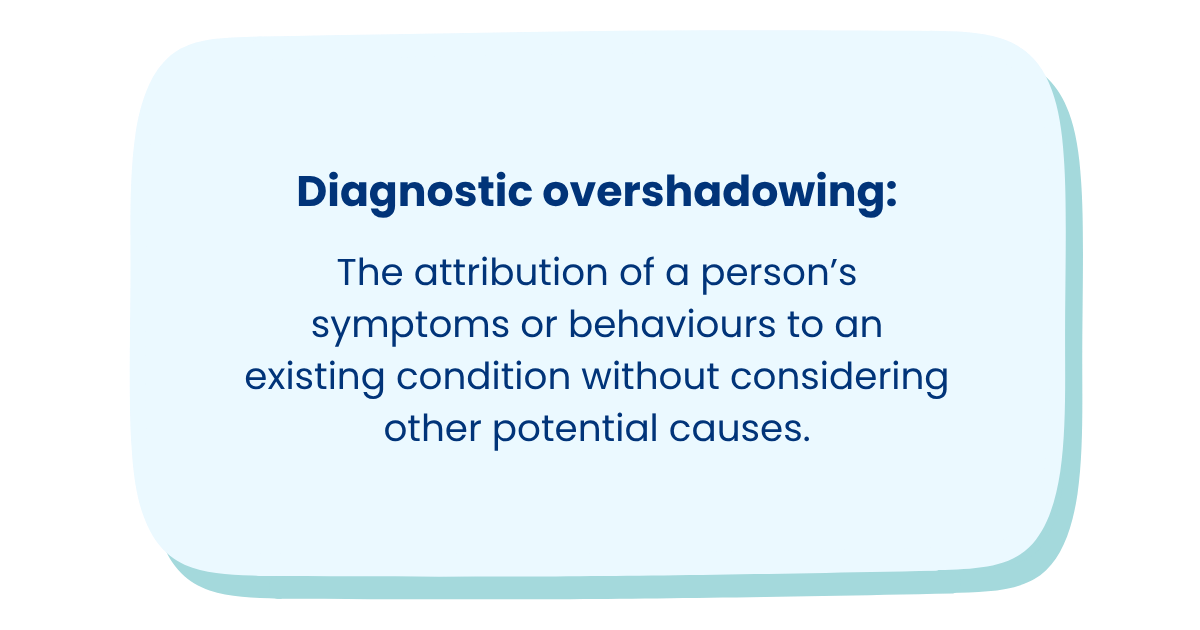
Research has highlighted misdiagnosis and diagnostic overshadowing as a particular issue for women and girls presenting to mental health services. Mental health difficulties may then be treated without recognising an underlying neurodevelopmental difference.
This can be especially difficult when someone masks their traits, as clinicians may not see the full picture during an assessment. In one study, participants described delayed autism identification that they linked to lack of professional recognition and increased masking.
French and Cassidy also found examples of late-diagnosed adults whose neurodevelopmental differences had previously been interpreted in other ways, including one woman whose ADHD had been diagnosed as postpartum depression.
Some people may therefore receive several diagnoses or treatments before autism or ADHD is recognised. Together, these factors can delay access to appropriate support and understanding of a person’s needs.
Conclusion
AuDHD can be missed - Traits do not always look the way people expect, especially in women and non-binary people.
Masking can hide difficulties - Someone may appear to be coping while their support needs are overlooked.
Another diagnosis can come first - Autism or ADHD may be missed when difficulties are explained in other ways.
Late diagnosis has many causes - Gender expectations, masking, clinical assumptions and missed recognition can all play a part.
References
Warrier V, Greenberg DM, Weir E, Buckingham C, Smith P, Lai MC, et al. Elevated rates of autism, other neurodevelopmental and psychiatric diagnoses, and autistic traits in transgender and gender-diverse individuals. Nat Commun. 2020;11(1):3959. doi:10.1038/s41467-020-17794-1.
Adams N, Jacobsen K, Li L, Francino M, Rutherford L, Tei C, et al. Health and health care access of autistic transgender and nonbinary people in Canada: a cross-sectional study. Autism in Adulthood. 2025;7(1):66–80. doi:10.1089/aut.2023.0024.
Rucklidge JJ. Gender differences in attention-deficit/hyperactivity disorder. Psychiatr Clin North Am. 2010;33(2):357–373. doi:10.1016/j.psc.2010.01.006.
Lai MC, Lombardo MV, Baron-Cohen S. Autism. J Am Acad Child Adolesc Psychiatry. 2015;54(1):11–24. doi:10.1016/j.jaac.2014.10.003.
Loomes R, Hull L, Mandy WPL. What is the male-to-female ratio in autism spectrum disorder? A systematic review and meta-analysis. J Am Acad Child Adolesc Psychiatry. 2017;56(6):466–474. doi:10.1016/j.jaac.2017.03.013.
Craddock E. Raising the voices of AuDHD women and girls: exploring the co-occurring conditions of autism and ADHD. Disability & Society. 2024;39(8):2161–2165. doi:10.1080/09687599.2023.2299342.
Bargiela S, Steward R, Mandy W. The experiences of late-diagnosed women with autism spectrum conditions: an investigation of the female autism phenotype. J Autism Dev Disord. 2016;46(10):3281–3294. doi:10.1007/s10803-016-2872-8.
Maciver D, Singh Roy A, Johnston L, Boilson M, Curnow E, Johnstone-Cooke V, et al. Are we getting better at identifying and diagnosing neurodivergent girls and women? Insights into sex ratios and age of diagnosis from clinical population data in Scotland. Autism. 2026;30(2):375–389. doi:10.1177/13623613251383343.
Moseley, R. L., Gamble-Turner, J. M., Kim, E., & Spencer, C. (2026). Autism, ADHD and the menopause. Post Reproductive Health, 32(3), 145–155.
National Autistic Society. Autistic people and masking [Internet]. London: National Autistic Society; 2022 Jul 7 [cited 2026 Jul 1].
Cage E, Troxell-Whitman Z. Understanding the reasons, contexts and costs of camouflaging for autistic adults. J Autism Dev Disord. 2019;49(4):1899–1911. doi:10.1007/s10803-018-03878-x.
Hull L, Petrides KV, Mandy W, et al. “Putting on My Best Normal”: social camouflaging in adults with autism spectrum conditions. J Autism Dev Disord. 2017;47(8):2519–2534. doi:10.1007/s10803-017-3166-5.
Raymaker D, Teo A, Steckler N, Lentz B, Scharer M, Delos Santos A, Kapp S, Hunter M, Joyce A, Nicolaidis C. Having All of Your Internal Resources Exhausted Beyond Measure and Being Left with No Clean-Up Crew: Defining Autistic Burnout. Autism in Adulthood. 2020;2(2):132–143. doi:10.1089/aut.2019.0079.
French B, Cassidy S. “Going Through Life on Hard Mode”—The Experience of Late Diagnosis of Autism and/or ADHD: A Qualitative Study. Autism in Adulthood. 2026;8(1):127–136. doi:10.1089/aut.2024.0085.
van der Putten WJ, Mol AJJ, Groenman AP, Radhoe TA, Torenvliet C, Agelink van Rentergem JA, Geurts HM. Is camouflaging unique for autism? A comparison of camouflaging between adults with autism and ADHD. Autism Research. 2024;17(4):812–823. doi:10.1002/aur.3099.
Graham R, Matthews Z, Parker J, Dyer T, Cullinane H, Crole-Rees C. A thematic analysis of the views of neurodivergent women with a personality disorder diagnosis on clinical pathways within mental health services. Discover Mental Health. 2025;5(1):200. doi:10.1007/s44192-025-00340-0.